12 May 2026
Latest Chikankari Suit Designs 2026: Colours, Thread Work & Dupatta Pairings
The chikankari suit designs defining 2026 — soft pastels, the enduring white-on-white classic, and coloured thread work — plus how the dupatta you pair changes each one.
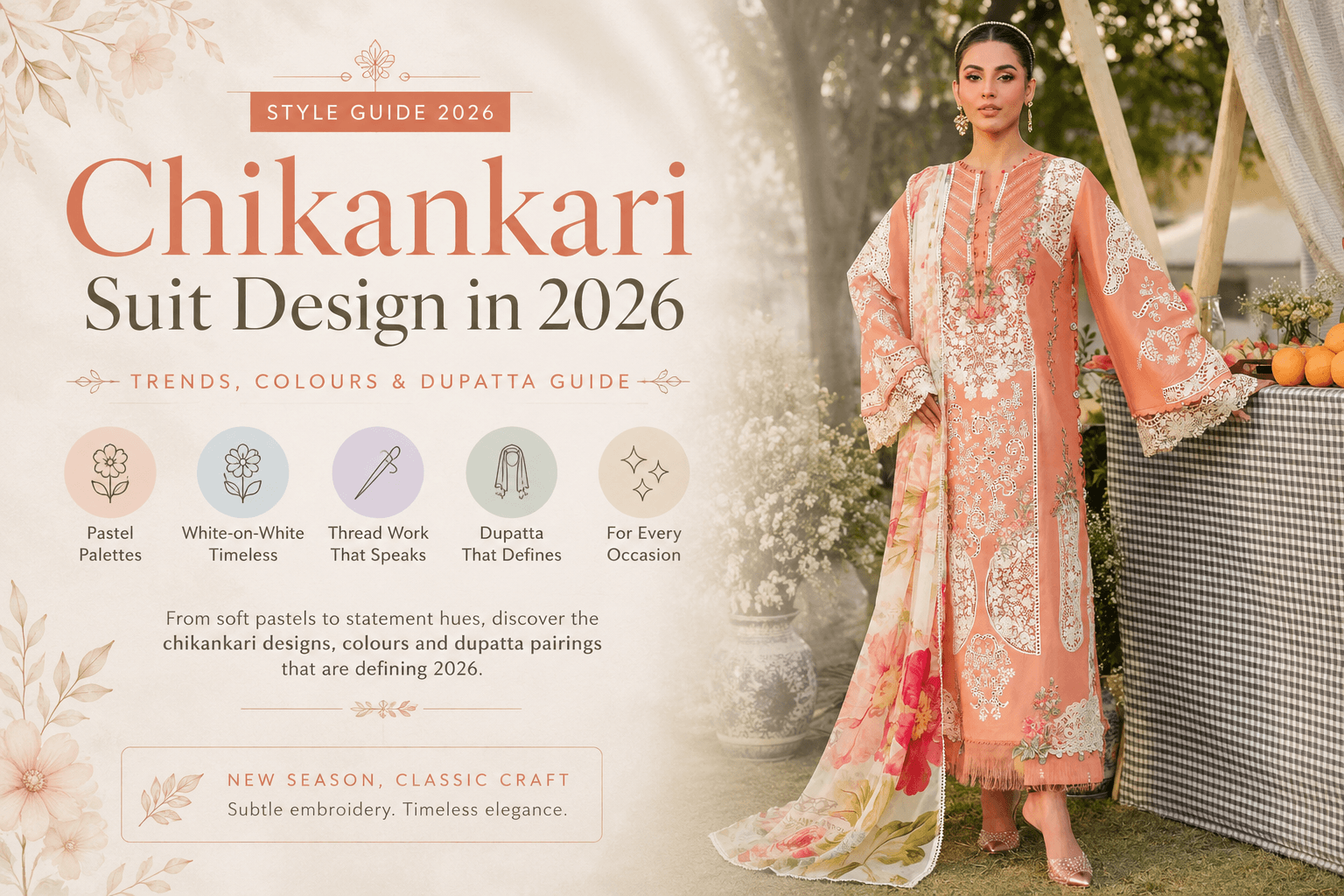
Chikankari suit design in 2026 is moving in two directions at once: soft pastel grounds with tonal thread work, and the classic white-on-white that never really left. What is changing most is not the embroidery itself but the pairing — printed net and organza dupattas are doing more of the visual work, letting the shirt stay quiet.
This is a look at the designs worth knowing this season, what each one actually suits, and how to pair it. If you are new to the craft itself, start with the guide to what chikankari is and how it is made — this piece assumes you already know a bakhia from a murri.
Which chikankari colours are trending in 2026?
Pastels are the defining palette of the season: peach, sky blue, lilac and mint, worked in thread a shade or two from the ground rather than in sharp contrast. The effect is quieter than the high-contrast embroidery of previous seasons and considerably easier to wear in daylight.
The practical appeal is that a tonal pastel suit is genuinely versatile. It reads as daywear stitched simply, and as occasionwear with a worked dupatta and a more structured neckline — which is a lot of range from one three-piece.
Peach and sky blue
The two most wearable pastels of the season. The peach chikankari suit with a printed net dupatta is the clearest example of the 2026 formula: a soft ground, thread work close in tone, and a dupatta carrying a floral print that supplies the contrast the shirt deliberately withholds. The sky blue version of the same pairing does the same thing in a cooler register, which tends to suit brighter daylight better.
Lilac and deeper purples
Purple has moved from occasion-only to everyday in this palette. The purple chikankari suit with a printed net dupatta sits at the deeper end — still tonal in its thread work, but with enough saturation to carry an evening event without additional embellishment.
Is white-on-white chikankari still in style?
Yes — white-on-white remains the benchmark rather than a trend, and 2026 has if anything renewed interest in it. It is the form the craft was built around, and the one where stitch quality is most visible, because there is no colour contrast to hide behind.
The off-white chikankari suit with an organza dupatta is the most formal reading of this: organza holds its shape rather than falling soft, which gives a completely tonal outfit some structure. Pair the same idea with a net dupatta instead — as in the off-white chikankari suit with a net dupatta — and it becomes noticeably less formal.
Coloured thread on a coloured base
The third direction is the boldest: coloured thread work on a saturated ground, where the embroidery is meant to be seen from across a room rather than discovered up close. The rust orange chikankari suit with a contrast dupatta takes this approach, using a contrasting dupatta rather than a tonal one to complete the look.
This is the hardest of the three to accessorise, and the most striking when it works. As a rule, when the shirt is doing this much, let the dupatta stay simple.
How the dupatta changes the design
The single biggest decision in a chikankari suit — after the colour — is the dupatta, because it determines whether the embroidery reads as the focal point or as texture:
| Dupatta | What it does to a chikankari shirt | Best for |
|---|---|---|
| Printed net | Carries the pattern, letting a tonal shirt stay quiet | Pastel and white-on-white suits |
| Plain net | Adds volume with almost no visual weight | Heavily worked shirts |
| Organza | Holds its shape, adding structure and formality | Tonal suits needing definition |
| Chiffon | Falls softest, closest to the body | Everyday wear and warm weather |
If the dupatta is your deciding factor, it is easier to browse that way from the start: suits with a net dupatta and suits with a chiffon dupatta are separate listings, and the full chikankari suits collection shows every pairing together.
Choosing a design by occasion
- Daywear and work. A tonal pastel with a chiffon or plain net dupatta, stitched simply. Comfortable, and it does not read as an occasion outfit.
- Daytime events. White-on-white with an organza dupatta — the most reliably elegant combination in the category.
- Evening. A deeper ground such as purple or green, where saturation does the work that embellishment would otherwise have to.
- Eid and family occasions. A worked pastel with a printed dupatta gives you the most range, since the same suit can be dressed up or down by how you stitch it.
Beyond chikankari specifically, the wider 2026 season has seen renewed interest in block prints, chunri-inspired patterns and tonal geometrics across Pakistani lawn generally — worth knowing if you are building a summer wardrobe rather than buying a single suit.